Showing posts with label graphic novel. Show all posts

Saturday, August 14, 2010

I'm back! Plus, Grease Monkey by Tim Eldred

Hi guys! I disappeared for three months, and in all probability you've all forgotten that I exist! Sorry! Basically, my computer died for a while, and then I was in the throes of summer college and I just wasn't up for it. I didn't read any blog posts during the time I was gone either, so I'll be catching up for a long time. But I'm back, and I read some awesome books while I was gone!

Grease Monkey was one of those awesome books. It's a black-and-white science fiction graphic novel about a space station in a future where an awful lot of humans have been exterminated by aliens. Benevolent aliens came along and helpfully lifted gorillas up to the level of humans, so that the world wouldn't be too underpopulated to survive. Now, the gorillas and humans who populate the space station are in constant preparation, just in case the bad aliens come back. The book follows Robin Plotnik, a new cadet, as he assists Mac Gimbensky, the gorilla on the cover who happens to be the mechanic for the best squadron of fighter pilots on the station, the all-female Barbarians.


That's all just the set-up, though. What you get when you read this is the experience of living on that space station, with those people. It's not a sweeping space-military war epic. It's not a "how disturbing could I possibly make these aliens?" story, or an "in the future we all have weird sex every second of every day" story. It's not a "realistic" story wherein unlikeable people make stupid mistakes and just live with it. It's about real people having normal everyday problems, and TOTALLY COMING OUT ON TOP. It's awesome!


Like I said, it's not a sweeping epic. It's written in vignettes, for the most part, and that's where the day-in-the-life feel comes from. It's lots of days in their lives, and their lives are way funnier and more awesome than mine. It's a rich, complete story, it tries to make you think, and it's intense sometimes, but it's not trying to shock you or impress you with how trendy it is. You can read it in tiny little sips, one vignette at a time, and enjoy it, but it's the kind of book you just WANT to read, because when you're reading it, you're happy.


Since it's a graphic novel, a word on the art: Fantastic. Very clean and crisp and fun to look at, a pleasure to look at. There's no trouble telling which characters are which or what's going on in the panel, and a big spread will take your breath away. It really will.


You can read the ongoing sequel at the Grease Monkey site, as well as find all kinds of art, suggestions for further reading, and other cool stuff. I say once again: Awesome.


I've got loads of books to post about and plenty of spare time, so I'm hopefully back on a weekly schedule now. I hope y'all will bear with me as I get back into the swing of things.

Monday, March 1, 2010

The Masterplan by Scott Mills

The Masterplan is an indie sci-fi graphic novel coming to you from Top Shelf Productions, which you might have heard of. They've also published several books by Alan Moore, the Owly series by Andy Runton (LOVE), Tales from the Farm by Jeff Lemire, and a bunch of other stuff that I haven't read. Just judging by the ones I have read, Top Shelf only publishes works of stunning genius. I could be wrong.

Anyway, The Masterplan. A brilliant scientist drags his ex-wife and his brother along on a mission designed to keep the universe from expanding too far (gazillions of years in the future, when that might be a problem.)

This isn't a traditiional graphic novel... It reminds me of a webcomic more than anything else, except not designed to be read one strip at a time. The art is in black and white and minimalist, with the characters mostly just distinguishing characteristics with a hint of background behind them. It makes the reading really smooth, and it feels sort of wistful and pure. It suits the story.

This is a pure kind of sci-fi, very much about ideas and science and an intergalactic, universal scope. It's not science-y, it's very easy to understand and I don't know how accurate any of the theories might be, but it is about science. It's also about those three characters I mentioned, but it's not like we have to know every detail about them. We know how they feel. It's about travelling all over time and space, meeting aliens, robots, themselves, and other awesomeness, but its also touching and sad in a way that's hard to describe. Wistful.

This is a great book and I highly recommend it. It's hard to describe, but it's an experience I really enjoyed. You'll want to have a few hours to yourself and just sit down and read it all the way through, and then sit there staring at the cover for a while before you move on. (If you ever do.)

Buy The Masterplan

Friday, January 29, 2010

Fate's Favorite Superman Books

I've devoted a not inconsiderable amount of thought to reviewing graphic novels in recent months. I LOVE graphic novels and I read at least one of those to every "normal" book I read, and of course I have plenty of thoughts about them, but I couldn't figure out how best to do reviews. There's not much point in telling you how much I liked Elongated Man #783 (fake example) if you don't know who Elongated Man is and haven't read the preceding 782 issues.

For the moment, I'm going to try to do graphic novels that stand alone and tell a complete story, and I'll probably continue to do more than one at a time when I do them. So, without further ado: Superman!

My three favorite titles, through mild coincidence, have nothing to do with each other but do tell an overall story. All Star Superman by Grant Morrison, Superman: For Tomorrow by Brian Azzarello, and Kingdom Come by Mark Waid.

All Star Superman is the only Grant Morrison title that I have any kind of enjoyment for, but it is AMAZING. We already know the basic story, about how Superman was sent as a baby from the planet Krypton, raised by a good farming couple in Kansas, etc. The Superman story has been told at least a thousand times, and Superman, on average, kind of bores me. All the stories are the same sometimes. But Morrison gets rid of the transitional material, the "story glue," and just shows us the panels that are important to the story. He shows us the heart of Superman, the reasons why we loved the story the first time we heard it. He shows us a naive, innocent man who is able to wield amazing power, and what's more, wield it well. The art is hard to explain, but I really like it. The whole story is contained in two volumes.

Superman: For Tomorrow is another two volume book, set a year after The Vanishing, a moment in which a substantial portion of Earth's population simply disappeared. It's a darker and edgier story, sparely written, and deeply moving. You have to fill in a lot of the story yourself, so it'll bear multiple re-readings. I was really surprised by how well the whole book was done... Azzarello shows us what happens when Superman loses his naivete and finds out the world is more complicated than he thought it was. It breaks his heart a little bit, but it doesn't break HIM. He doesn't lose his idealism. The art captures that story beautifully too... It looks like Superman in all his iconic awesomeness, but it incorporates shadows and uncertainty.

Now, if you've been following me for a while, you know how much I love Kingdom Come. It's one of my favorite graphic novels EVER, but it's also becoming one of my favorite Superman graphic novels. The Kingdom Superman is full of sorrow, and even bitterness, and he isn't perfect, but that doesn't make him any less Superman. He's still trying to do the right thing, and trying to save people. He still knows how to throw a punch and how to fill out spandex. I think Kingdom Come can be thought of almost as the future of For Tomorrow in a way.

I see these three graphic novels as partly a timeline, showing an almost childlike Superman growing up, but also as three kinds of Superman/Superman story. The simple kind, the kind that looks at the darkness, and the kind that goes all the way. Whole, breaking, broken. And the best thing is that all three kinds are about idealism. I love all of them. I love Superman. I love to turn a page and see a big, full-page drawing of Superman flying above all of us who are on the ground, because he's better than us, and he inspires us to be better too. Even when he's not perfect, he's inspiring.

There have been a few other ones I liked (Superman for All Seasons by Jeph Loeb was great, and the Superman: Man of Steel series that started in the eighties is my favorite longterm series) but these are my absolute favorites so far. For those of you who have never read Superman, I envy you the joy of discovering him for the first time, and I recommend Superman for All Seasons and then All Star Superman as a great place to start.

Buy All Star Superman (Volume 2 should be out in paperback at some point.)

Buy Superman: For Tomorrow

Buy Kingdom Come

Tuesday, January 12, 2010

I Kill Giants by Joe Kelly & Jim Ken Niimura

I spent forever trying to work up a review for this book but I'm finally facing facts: This book has to be read to be appreciated, and I cannot do it justice, so this is more of a "short blather" than a review.

Before I read it I had somehow gotten it into my head that it was about a post-apocalyptic little girl with an ax... In case someone else got that impression, it's completely wrong and has nothing to do with this book. This story is about a present-time girl named Barbara, about 12ish I think, who has an ancient Norse hammer in her bag, with which to kill the giants of the title.

This is a sad book. Barbara basically stole my personality from when I was younger, and I think anybody could find a similar element to identify with. It's also a funny book in some places, and an exciting book especially toward the end, and an intense book all the way through. The art is fantastic, nightmarish, disturbing and cute as scenes demand. The design of the book as a whole is fantastic too, I love just holding it.

The story is complete in one book (unfortunately.) I suggest Courtney Crumrin(review here) as something also amazing and of similar content and style, but not the same.

Buy I Kill Giants

Sunday, December 13, 2009

Andromeda Stories by Keiko Takemiya

Andromeda Stories is a three-volume manga by the author of To Terra, which I reviewed here. It's basically To Terra only good, and 300 pages shorter.

Where To Terra was a sci-fi story with fantasy workings, this is a fantasy story with sci-fi workings. The setting is the planet? star system? Andromeda, where they have dragon cavalry (awesome!) and a high-fantasy social structure, but advanced technology everywhere you might imagine magic. And where you might have an evil demon army, you have an evil army of mind-controlling machines taking over the planet. The technology parts are really what make the fantasy interesting; they make a very standard fantasy story go in cool new directions.

The characters are fantastic, especially where manga is concerned. Each one has a believable mixture of good and bad qualities unique to them, and they just seem to have a lot more THOUGHTS than other characters. They have reasons for the things they do and they really believe in those reasons.

The ending was one of those Twilight Zone endings... A foreseeable twist, but in a good way. Sad, faintly frightening, kind of cool, and interesting, but kind of off on a tangent where I would've put a more traditional ending.

MINOR SPOILER. Beware brother/sister incest. It worked okay for the story and it's only toward the very end, but the part that kind of squicked me out was that they're supposed to be in their 20s but the girl at least looks about 12. Of course a lot of girls are drawn that way in manga, but still. END SPOILER.

On the whole it's a quick story with interesting ideas and pretty pictures, which sounds to me like good manga! It kind of reminded me of a cross between John Christopher's Tripods series (which is awesome) and Osamu Tezuka's Buddha (which is good manga and written well at the least.)

Tuesday, November 10, 2009

To Terra by Keiko Takemiya

To Terra is a three-volume sci-fi manga that apparently was written several decades ago (70s?) and was just released in English. (To accompany an anime, I think.) The idea is that in a fully computer-dependent society, and by that I mean on ONE particular computer, a group of psi-powered mutants (the Mu) have been exiled from society and for some reason think that going back to Terra will solve all their problems. It kind of reminded be of Battlestar Galactica. (The old one... can't stand the new one.)

I liked this, but it's totally incomprehensible. I wrote in my book journal that it was "like a Monty Python sketch done at half speed by lobotomy patients," and while that might be a little excessive, that was pretty much the impression I got. All the characters are exactly the same except for the goals we're told they have, and those same informed goals are the only reason for the plot. The art, which is absolutely gorgeous on big sweeping starscapes and spaceships, is indecipherable in small panels.

It takes forever for anything significant to happen, and when it does there seems to be no reason for it. Since none of the characters have any reasons for their beliefs, their actions just come across as juvenile and ill-informed. Every so often there's a time-out to try and explain some of the science involved, but that just makes it worse. I understand what the story is doing emotionally, but I have no idea what's ACTUALLY going on or with what characters.

But, despite all that, I did like it. The atmosphere is absolutely mesmerizing, and if you just sort of relax and zone out while you read it becomes dreamscape-y rather than just confusing. It's an interesting look at some older sci-fi, where some common ideas are used as new and thrown together in unorthodox ways. It's sci-fi, but Takemiya tends to use fantasy in the workings of it. I certainly didn't get bored with it, as hard as I was working to follow the story.

There's this sudden flurry of action and energy and awesomeness at the end that makes the whole saga worth the trouble... And then an epilogue that plunged me back into misty confusion. So, if you don't really get what happened, neither do I. I also don't understand why a central male character was persistently drawn as a girl, but that's beside the point.

This is another one of those books that I'm not sure whether to recommend or not. If it sounds interesting then go ahead, knock yourself out, it's only three volumes. I don't have any recommendations at this point, but I'll be reviewing some similar things in the future.


Buy To Terra... (v. 1)

Friday, June 12, 2009

Courtney Crumrin and the Night Things by Ted Naifeh

I've had this series recommended to me by several people, a friend of mine who's recommended a lot of my now-favorite books, a review by Darla D from Books and Other Thoughts (who also recommends a lot of books I end up loving), and several other people I can't remember. It took me a while to get around to reading it, but I loved it when I did!

Courtney Crumrin and the Night Things is a kids' graphic novel. It has a classic plot--girl moves to creepy old uncle's house and creepy stuff happens--but this is a model example of Tropes Are Not Bad.

There are three main things that keep this book amazing:

A) It knows its tropes, loves them, and uses them well. This is the kind of story kids like.

B) It's funny, in a biting way. It's SMART humor. The characters and dialoge are just off-beat enough to make everything seem shiny and new.

C) It's a graphic novel with gorgeous, quirky, dark art that sets the mood and lets us create a little more of the story in our own heads while giving us something pretty to look at. I love fantasy art in general, and this art adds humor to dark scenes and a sense of creepy to the funny scenes.

I will warn that the characters are not paragons, and this is not a morality play. The characters are good, but they aren't above being vindictive and conniving. It's a little creepy sometimes because it's unexpected, but it's realistic and would promote discussion.

I highly recommend this series to kids (of all ages ;) ) who like this sort of quirky fantasy/gothic horror trend that's happening right now in fiction. Fans of Lemony Snicket, The Spiderwick Chronicles, Skulduggery Pleasant, Zorgamazoo, that whole vein.
Buy Courtney Crumrin & The Night Things

Saturday, May 9, 2009

Dramacon (all three volumes) by Svetlana Chmakova


It seems like I've been giving a lot of negative or iffy reviews... I hope to fix that today!

Dramacon wasn't the first manga I read... that was Hellsing Vol. 1. Flash review: The story and characters were great and I would've loved it if it hadn't been a manga. The manga-ness was really annoying and got in the way of the characters for me.

Dramacon is way better. If it wasn't a manga, I wouldn't like it.

The story is in three volumes, each one a different year for Christie at a manga convention. It was hilarious--one of those books I couldn't read in a public place because of the stares--and sweet, using the melodramatic spazziness manga has to hit all the right emotional notes for the characters and make it realistic and over the top at the same time.

The art is great, switching styles just a little bit to suit the tone of each scene. It's subtle, funny, and it works. It's also easy to follow, which is important for me because without clear art I can't figure out what's going on or who's speaking, no matter what country the comic book's from.

Although I've never been to a real con, I think it captured the atmosphere really well. The first volume is the funniest and simplest, with the only big plotline being Christie meeting Matt, that handsome black-coated guy on the cover. The second volume is more serious, adds more characters and has more real-life-like drama. The third volume doesn't have as much stuff about the con itself because it's keeping track of all the characters, but it's an excellent conclusion. (There may be a fourth volume in the works, but a google search and Svetlana Chmakova's website didn't give me that impression.)

I'm in the middle of Death Note right now and loving it, but these three (or five if you count each volume of Dramacon) are the only manga specimens I've even made it to the end of, and Dramacon is the only shojo. I either don't GET what's going on or I just don't LIKE it. So, got a good recommendation? Leave it in the comments!

Buy Dramacon

Friday, May 1, 2009

Angel: After the Fall by Brian Lynch

That's a nice picture of Angel and the dragon on the cover there, no? There's a nice gallery at the end of the book with more pictures (although I can't remember if there are more dragons in them.)

Some spoilers ahead.

I'm a huge fan of Angel, but I was shy of reading the season 6 comics for a while because I liked the way the series ended and I wasn't much of a graphic novel fan at the time.

It turns out I didn't miss much. I declared this book to be un-canon... not because it was bad stuff, but because it was just so boring and unsatisfying. The things I didn't like about season 5 were still there to be disliked, and while the book was very intense in places, it was all about all the awful things that had happened to the characters since we'd seen them last. Which would be fine, but... nothing terrible really happened. At all. And what things did happen were the things that happened onscreen in the series, there was nothing NEW to deal with.

Also, the story picks up quite a bit after the last scene of season 5, and I was pretty confused for most of the book. (The second volume goes back to just after the series end. While it wasn't any more interesting than the first volume, I think the order ought to really be switched. I spent both books confused rather than neither.)

The best part was probably the art. It really harked back to the visual feel of the series itself, it wasn't hard on the eyes like some graphic novel art is, and I just enjoyed looking at it.

SPOILER: Everyone lives. (Although some by a skewing of the definition.) So, the ending of the series didn't really matter. While some of the things they thought up for the graphic novel were pretty clever, they took away what the ending was supposed to be ABOUT. Not Fading Away. Not backing down, no matter what. Going out swinging, even though you know you're going out.

It was worth reading as an Angel fan, definitely not a waste of time, I just prefer my own mental image of the season 5 aftermath. I recommend it for Angel fans, but I suspect that anyone else might be very confused. For a really amazing Buffyverse graphic novel try Fray; I loved it even when I didn't like graphic novels and didn't know much about Buffy, and I still love it now.


Buy Angel: After The Fall

Friday, March 6, 2009

Review: Kingdom Come by Mark Waid (+ Watchmen Yay!)


I saw Watchmen last night. It was excellent. Basically the graphic novel brought to life, almost to the point that there's no reason to watch the movie because it's just a shorter, bloodier version of the graphic novel. But I enjoyed it, and I applaud the makers for their self-discipline in not screwing around with the material.

Yes, that does have something to do with this review! Kingdom Come is like Watchmen, only with real DC superheroes. Superman, Batman, Wonder Woman, and all the rest. It was published in 1997, is less than half the size of Watchmen, and is absolutely fantastic.

The story takes place some time after the classic "metahumans" have retired, and the world is now being overrun by a new breed of superhero. The kind that America asked for, the kind that doesn't have any rules about not killing its enemies. Unfortunately, they also don't care about human collateral damage. The old superheroes come out of retirement to try to set things to right. The story is told in the form of a Christmas Carol-esque journey taken by a pastor and a cloaked spirit who demands that he judge the superheroes and say who will be punished in the end.

As far as I can tell, the characterization is very good. (I'm not sure because I'm not very familiar with the "classic" superheroes.) My favorite character is Batman, which comes as no surprise to me. The art is very good, not drawing attention to itself while being colorful and descriptive. There are a lot of large panels that I really loved looking at.

The plot is amazing, really grabs you by the throat and makes you listen to what it's saying. It asks questions like "Why do we fight?" "Why should we?" "Who is a part of the human race, and what does that mean?"I was on the edge of my seat the entire book, desperate to know how it ended, and it certainly delivered on its promise of a grand finale.

Try to get a hold of this editionit has a bonus scene in the back. My review of Watchmen is here, and can be summarized with the words "READ WATCHMEN." Another graphic novel in this vein that I'd recommend is Astro City, which is less intense but works with the same themes.

this edition

Friday, January 30, 2009

Review: The Plain Janes by Cecil Castellucci


The Plain Janes is a book that came out in 2007 from minx, an imprint of DC Comics that makes chick-lit graphic novels. Another blog reviewed it and it looked interesting, so I picked it up from the library. (If it was you let me know, I can't remember who reviewed it for the life of me.)

This book follows a girl named Jane who leaves Metro City in favor of a small town after her family is traumatized by a bomb detonation. Many of her thoughts are revealed in her letters to a comatose John Doe who was standing next to her when the bomb went off. At her new school she joins the group of school rejects, all named Jane, and they begin a series of "art attacks" on the town.

The Plain Janes is simple and real, without any distractions from the main emotion. It's perfect for graphic novel format because so much of it is about the art itself, and the style reflects that. The pictures are clean and uncluttered, and dialogue is economized.

The character development is excellent in this, especially considering how short the book is. I usually find that the more realistic characters are the more annoying they get, but the Janes--Main Jane, Brain Jayne, Sporty Jane and Theater Jane--are my kind of people. There's also a collection of supporting characters, each of whom has much more depth than you might expect on their first appearance. The story raises good questions and delivers a pitch-perfect ending.

There is a sequel called Janes in Love that I would very much like to read, should the library choose to buy it, and Castellucci has written several traditional novels, but if you're looking for something similar to this, your best bet is to try out the other books from minx.


Buy The Plain Janes

Friday, December 26, 2008

Review: Bucky Katt's Big Book of Fun by Darby Conley


My brother gave this to me for Christmas... Thank you, brother!

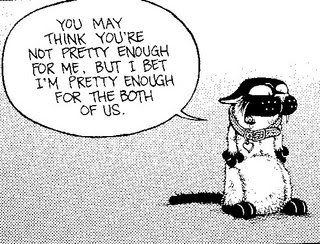
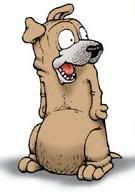
Get Fuzzy is a daily comic strip featuring Bucky Katt the Siamese, Satchel Pooch the adorable Shar Pei/Yellow Lab mix, and Rob Wilco the slightly geeky owner of the apartment.

I'm a longtime fan of Get Fuzzy and it's one of the few newspaper comic strips that can actually get a belly laugh out of me. The art is cute and clear, and Darby Conly is great at depicting the animals' expressions and attitudes.

This strip is really accessible to everyone. Bucky's cattiness is hilarious whether you're a cat person or not, as is Satchel's clueless dogginess, because they're both SO cat and dog and everything they do is so recognizable!

This is the second big collection of strips, the first being Groovitude: A Get Fuzzy Treasury. You can also get a free daily fix here, via Comics.com. If you're already a Get Fuzzy fan, try out Pearls Before Swine.


Buy Bucky Katt's Big Book of Fun

Friday, December 19, 2008

Review: V for Vendetta by Alan Moore

This makes the fourth graphic novel I've read. (That's Watchmen, Sandman, Angel Season 6, and this. Watchmen and Sandman were reviewed here and here.) I saw the movie ages ago and adored it, but I didn't realize it was a graphic novel until I was looking for more stuff by Alan Moore, writer of my beloved Watchmen. Needless to say, the anticipation ran high.

I was not disappointed. V for Vendetta is much sleeker than Watchmen, more streamlined, and it suits the story very much. The story is as follows: A Guy Fawkes-ian terrorist, code name V, is targeting a post-WWIII totalitarian government. Hijinx ensue.

The art in this book was dark, which suited the mood perfectly, but I had trouble making out the pictures sometimes. Especially in the last third, I couldn't figure out which characters were which or remember what had happened to them. Luckily V's silhouette is very recognizable, and he was the character I was really interested in...

V is definitely insane. But a cold, clean, utterly sane kind of insane. He knows exactly what he's doing and he believes in it, totally and completely. His strikes are surgical, perfect, terrifying. He is the only man who could bring about the kind of changes wrought in the space of the novel... whether or not those changes should be brought about is the main course of the meal for thought. V is steeped in literature and culture, practically everything he says is a quote, and it makes him like a living metaphor, adding new dimensions everywhere you look. My favorite scene is a long conversation he holds with a statue of Lady Justice. Does he really believe the statue is talking to him? Does he just want it to be? Or is he just playing out the metaphor he sees? The scene distills the character of V perfectly for me, showing all of his intent and the different sides to his actions. You'll know it when you see it.

V for Vendetta didn't hit me quite as hard as Watchmen, but the punch definitely connected. I recommend it without hesitation, especially to fans of the movie. While it's been too long since I saw it to comment on any specifics, the atmosphere and gist of the movie and novel seem to be the same, and I certainly enjoyed both. If the Guy Fawkes thing is new to you like it was to me, I recommend your favorite search engine, Wiki, or the book Faith and Treason: The Story of the Gunpowder Plot by Antonia Fraser.

Buy V for Vendetta

Friday, November 7, 2008

Review- The Sandman Vol. 1 by Neil Gaiman


You may remember my glowing review of Watchmen several weeks ago. (Review is here.) You may remember me saying that I don't usually read graphic novels because I don't usually understand them. You may remember how very very much I loved Watchmen.

Well, a good friend of mine got the same earful of happiness after I read Watchmen, and she, being a comic book buff, promptly gave me recommendations! The Sandman was on the top of her list. And friends... it's awesome. I freely admit that I had trouble following it for the first half, falling prey to my usual nemeses: Not being able to remember which characters were which and not being able to tell what was going on in the frame. But something in it really appealed to me, and in the middle of the book, suddenly it started making sense. A lot of sense.

I love anthropomorphic personifications. Maybe that's a weird sentence, but I do. Once I could really grasp that this is a book about personifications, then I had a handle to hold on to while I figured the rest of the book out. And these personifications are like no others. They're actually SCARY. Most of the time when something is made human, it loses a sense of Otherness and we start to oversympathize. But, while these characters could be sympathized with, (boy could they, I think I'm in love with Dream) they never stopped being something larger than life.

The disjointedness of the plot and art were probably what I had to get used to the most, but I really like them now. There are a lot of sudden transitions and flipping back and forth between scenes. There's a lot of thick black and bold, dark colors. That's the mood of the story, and it's wonderful. Even I, a person of no squeamish tendencies, had one or two gross-out moments (warning for those of more delicate sensibilities,) but it reassures me when a story doesn't shy away from the bad stuff. When the bad guys are bad.

I have three favorite scenes. The first: the duel in Hell. This was when I really scooted up to the edge of my seat and started paying attention. I thought "Hey, I better keep an eye on this Dream guy, he knows his stuff." He had me at "I am h--" ...well, I won't spoil.

The second: Toward the end, when Dream was with Doctor Destiny for the last time. This scene was the one that showed me how incredible Dream really is, how powerful but still with a huge grasp of the way things really are.

The last: The final chapter. Because Death was in it, and she was scary!

So. This was the first volume of eleven. I'm discovering that there's a real intensity that can be achieved in the graphic novel form, like a story distilled into only the most important images and dialogue, and I look forward to reading the rest!

Buy The Sandman Vol. 1: Preludes and Nocturnes

Wednesday, October 15, 2008

Review: Watchmen by Alan Moore

I don't usually read comic books. Pardon me, graphic novels. It's not that I don't approve of the medium or the genre, it's just my brain won't process the format. I can't keep track of who's who, what's going on, or even who each speech bubble belongs to.

But, I love the comic book movies that have been coming out, and when I saw a trailer for Watchmen I was very interested. I'd never heard of it before, so I went to the Wikipedia article and read just enough about its reception to realize that I HAD to read it and see it in action.
And boy, was I impressed! This is seriously the best stuff I've read in a long, long time, and even though it's one of the most complicated stories I've seen, I didn't have any trouble following it.
For those of you who also have never heard of it, it's an alternate history set in 1985. Superheroes, or masked vigilantes which in this case don't have any superpowers, were once active but were then outlawed. The one notable exception is Doc Manhattan, who does possess superpowers and works for the government, and a possible second exception is Ozymandias, who is supposed to have "peak human" powers. The story begins with the murder of one of the costumed heroes, and proceeds with another hero's investigation. The book explores the idea of what it would really be like if there were superheroes in the world, but its basic theme can't be stated better than "Who watches the watchmen?"

The first things that struck me were the visuals, the cinematic quality of it all. The "camera" zooms, pans, and chooses angles in exactly the way needed to emphasize what's happening, but the fact that it isn't a camera allows for pauses and juxtaposition that can't really be done in film. The art itself was perfect and very detailed, giving everything a kind of uniqueness and realism and made each frame memorable. There are also multiple flashbacks, and at the end of every chapter a fictional primary document is included, which serves to expand the universe in time as well as space and make it seem all the more real. I could mention the frames that were the most striking, that are still burned into my retinas, but that would give away too many spoilers.

The second perfect thing is the characterization. Characterization is one of the things that I usually miss when I'm trying to read a comic, but Watchmen had a perfectly arranged balance of character exploration and plot. Neither overtakes the other, but both contribute to the story's progress. I was pleased to note that the romantic (or less than romantic) relationships between the characters were important and helped to move the story, they weren't just fanservice and they weren't boring. The characters range from Doc Manhattan, the inhuman character who has godlike powers, to Nite Owl, a kind of "average" superhero with a lot of gadgets, to Rorschach, the ultimate antihero.

The one most impressive feature is the sheer weight of all the subtle things going on at any given time. From the slowly counting doomsday clock, to the slow wash of blood through every chapter, to the chapter titles that are quotes by anyone from Bob Dylan to Albert Einstein. Every character is vital to the story. Every frame is vital to the story. Every poster on the wall means something, every incidental character means something, even a crazy dude carrying a sign is going to be important. (I totally pegged that one.) The atmosphere of the story, at first only barely noticeable, develops into an almost suffocating mixture of nostalgia and paranoia that pervades every action. And when the end finally comes... what are we to make of it?

Seriously. Read it. It's incredible.


Buy Watchmen